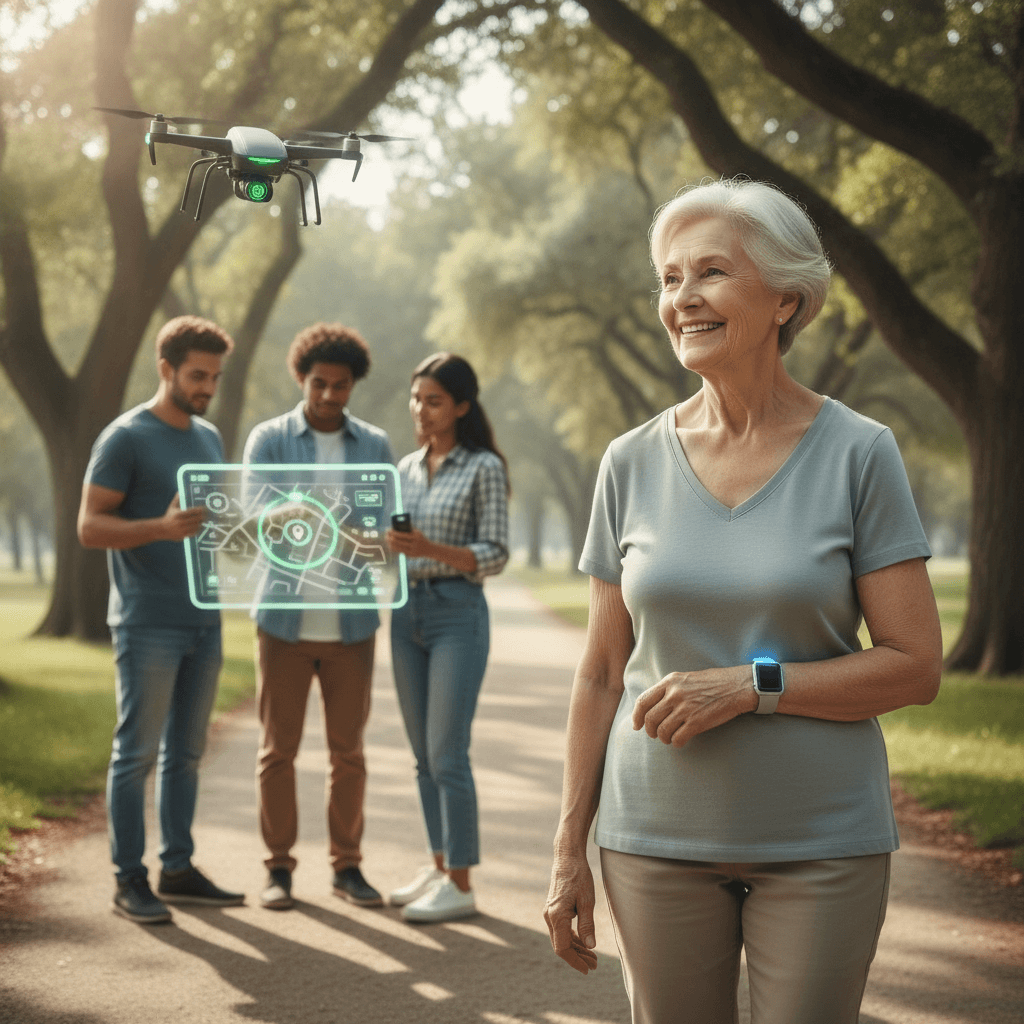
Ensuring the safety of our senior loved ones is a top priority for families everywhere. As people age, challenges like memory loss, mobility issues, or unexpected health events can make independent living feel risky. Traditional safety measures often feel restrictive, limiting freedom and sometimes causing anxiety for everyone involved.
I have seen firsthand how these worries can weigh on families. The desire to provide protection without sacrificing a senior’s autonomy is a delicate balance. We want our elders to live full, active lives while knowing they are safe and can get help if they need it.
This is where modern technology steps in. Tech startups are now creating smart, discreet, and effective GPS safety solutions designed specifically for seniors. These tools offer peace of mind, allowing seniors to maintain their independence and families to stay connected.
The Evolving Landscape of Senior Care and Safety
Years ago, options for monitoring senior safety were limited. Families often relied on daily check-ins, landline phones, or restrictive living situations. These methods, while well-intentioned, did not always meet the diverse needs of an aging population. Many seniors want to remain in their homes for as long as possible. They cherish their routines and the familiarity of their surroundings.
However, aging also brings an increased risk of falls, medical emergencies, or getting lost, especially for those with cognitive decline. This created a gap. Families needed ways to ensure safety without intruding too much on personal space or making seniors feel like their freedom was being taken away. We needed solutions that were both effective and respectful of personal dignity.
The rise of advanced GPS technology has changed this dynamic significantly. It offers a new layer of protection that is less intrusive than constant supervision but much more effective than relying on chance. This shift allows for a proactive approach to senior care, focusing on prevention and rapid response. It means we can support seniors in their desire for independence.
GPS Technology: A Foundation for Independence
GPS, which stands for Global Positioning System, uses satellites to pinpoint a precise location on Earth. For senior safety, this technology becomes a lifeline. It provides accurate location data, which is crucial during emergencies or when a senior wanders away from a familiar area. This system works seamlessly outdoors and often indoors too, providing broad coverage.
The beauty of GPS in this context lies in its simplicity and reliability. It operates independently of cell phone networks, though many devices use cellular data to transmit location information to caregivers. This means the system continues to work even if a phone is lost or out of battery.
We are seeing a revolution in how this core technology is applied. It is not just about knowing where someone is. It is about creating a safety net that supports freedom and peace of mind. GPS tracking empowers seniors to explore their communities and maintain social connections, knowing help is always within reach if needed.
Accurate Location Services
Modern GPS devices for seniors provide incredibly precise location data. This accuracy is vital when every second counts. If a senior falls in their yard or gets disoriented during a walk, caregivers can quickly find them. This reduces the time it takes for emergency services to arrive. It also minimizes anxiety for family members.
The technology often combines GPS with Wi-Fi and cellular triangulation for better indoor tracking. This means even if a senior is inside a large building, their approximate location can still be determined. This hybrid approach makes the system robust and dependable in various environments, a major advantage for diverse living situations.
Innovations from Tech Startups in GPS Safety
Tech startups are at the forefront of designing innovative GPS safety solutions. They recognize the unique needs of seniors and their caregivers. These companies are not just adapting existing technology. They are building new devices and services from the ground up to offer specialized features. This dedicated focus leads to products that are more intuitive and effective.
I have observed how these startups prioritize user experience, making sure the devices are easy for seniors to use. They often include features that go beyond basic location tracking, creating comprehensive safety systems. These advancements are changing how we approach senior care.
For a detailed look at the cutting-edge solutions these innovators are bringing to the market, I recommend checking out Tycoon Story. Their insights confirm how important these new developments are for senior well-being.
Real-time Tracking and Alert Systems
One of the most significant advancements is real-time tracking combined with advanced alert systems. Caregivers can monitor a senior’s location on a map through a smartphone app or web portal. This live tracking provides immediate updates on their movements.
These systems often allow caregivers to set up custom alerts. For example, if a senior leaves a designated safe area, an alert is sent instantly via text, email, or app notification. This proactive alerting ensures that families are informed of potential issues before they escalate. It gives them the ability to intervene quickly if something seems amiss.
Geofencing and Safe Zones
Geofencing is a powerful feature offered by many GPS safety startups. It allows families to create virtual boundaries around specific locations, like a home, a park, or a neighborhood. When a senior enters or exits these predefined areas, caregivers receive an alert.
This feature is incredibly useful for seniors who might be prone to wandering or getting lost. It offers a balance of freedom and safety. Seniors can move within their familiar zones without constant worry, and families only receive notifications when a boundary is crossed. It is a smart way to manage potential risks without being overly restrictive.
Wearable Devices and User-Friendly Interfaces
Many senior GPS safety solutions come in the form of wearable devices. These are designed to be comfortable and discreet, so seniors are more likely to wear them consistently. We know that if a device is bulky or noticeable, it might not be used, defeating its purpose entirely.
Startups focus on creating wearables that look like regular watches, pendants, or even shoe inserts. This low-profile design helps seniors feel less stigmatized by needing assistance. It supports their independence and allows them to carry on with their daily lives without feeling singled out.
The interfaces for these devices and their companion apps are also critically important. They are typically designed with large buttons, clear text, and simple navigation. This ensures that both seniors and their caregivers can easily understand and operate the system without needing advanced technical skills. Ease of use makes all the difference in adoption.
Discreet and Comfortable Designs
I have seen various designs that blend seamlessly into everyday life. Some devices are elegant pendants that can be worn around the neck, looking more like jewelry than a safety device. Others are integrated into smartwatches with a simple display and easy-to-press buttons.
This focus on aesthetics and comfort is not just about looks. It is about encouraging consistent use. A lightweight, comfortable device that does not draw attention is far more likely to be worn every day. This continuous wear is essential for the system to be effective when an emergency arises.
Beyond Location: Integrated Safety Features
Tech startups are enhancing senior GPS safety by adding a range of integrated features. These go beyond simple location tracking to provide a more comprehensive safety net. We are talking about solutions that anticipate potential problems and offer immediate help.
These additional features truly elevate the level of care and security. They turn a basic tracker into a full-fledged personal emergency response system. This holistic approach means that families can rely on a single device for multiple safety concerns. It simplifies management for caregivers.
I believe these integrated features are a game-changer. They address various risks that seniors face, making life safer and more predictable. It shows how technology can truly serve human needs in practical ways.
Emergency Response Integration
Many GPS safety devices include an SOS button. When pressed, this button immediately alerts designated family members or a professional monitoring service. Some systems even connect directly to 911 dispatchers. This ensures that help is on the way as quickly as possible.
The ability to connect with emergency services automatically or with a simple press is invaluable. It removes the need for a senior to remember phone numbers or struggle with a traditional phone during a crisis. This direct line to help provides critical reassurance for both seniors and their families.
Fall Detection and Health Monitoring
Another crucial feature is automatic fall detection. Devices equipped with accelerometers and gyroscopes can sense a sudden impact or change in orientation. If a fall is detected, an alert is automatically sent to caregivers or emergency services, even if the senior cannot press the SOS button.
Some advanced devices also offer basic health monitoring, like heart rate tracking or activity levels. While not medical devices, these features can provide caregivers with insights into a senior’s overall well-being. Any unusual changes might signal a need for closer attention. This adds another layer of passive monitoring that enhances overall safety and care.
Choosing the Right GPS Safety Solution
Selecting the best GPS safety solution for a senior can feel overwhelming given the many options available. My advice is to start by assessing the individual’s specific needs and lifestyle. Every senior is different, so what works for one person might not be ideal for another.
Consider their comfort with technology. Some seniors might prefer a very simple, single-button device. Others might be open to a smartwatch with more features. We need to choose something that they will actually use consistently. Ease of use is paramount here.
Also, think about the environment where the senior spends most of their time. Do they live alone in a large house? Do they frequently go out for walks? Are they prone to wandering? These factors will help determine what features are most important, like geofencing or fall detection. I always tell families to involve the senior in the decision-making process if possible. Their input is important for successful adoption.
The Future of Senior GPS Safety
The field of senior GPS safety is continuously evolving. We are only just beginning to see the full potential of these technologies. I expect future innovations to make these devices even smarter, more integrated, and virtually invisible.
Imagine devices with even longer battery lives, needing less frequent charging. We might see further advancements in predictive analytics, where systems learn a senior’s routine and can flag unusual patterns that might indicate a problem before an emergency even occurs. This could involve AI analyzing movement patterns or even subtle changes in behavior. We are moving towards truly intelligent safety nets.
I also anticipate greater integration with smart home systems. This could mean automatically locking doors if a senior leaves an area or adjusting lights and temperature based on their location within the home. The goal is to create an environment that actively supports independence and safety, adapting to the senior’s needs without constant manual input. The future looks bright for enhancing senior well-being through thoughtful technological design.
Empowering Seniors with Advanced GPS Safety
I have shown how tech startups are truly changing the game for senior safety, offering peace of mind to countless families. These innovations provide a critical balance of independence for seniors and vital security for their caregivers. From real-time tracking to smart geofencing and integrated emergency alerts, modern GPS solutions are more than just location trackers. They are comprehensive safety systems designed with dignity and ease of use in mind. We have explored how wearable devices are becoming discreet and comfortable, encouraging consistent use. We also looked at how features like fall detection and health monitoring add layers of proactive care. The ongoing advancements promise an even safer and more connected future for our aging population. I encourage you to research the options available and consider how these technologies can empower your senior loved ones to live more securely and independently. Let us embrace these tools to support healthy aging.